Introduction: Why Manual Subcontractor Payments Are Still a Problem
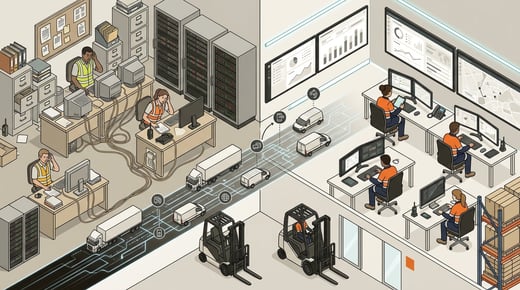
For finance leaders in Australian logistics, the complexity of managing subcontractor payments remains a persistent barrier to efficiency, accuracy, and profitability. Despite advancements in core transport operations, many mid-market carriers and 3PLs still depend on spreadsheets and disconnected systems to reconcile subcontractor invoices, compliance documents, and payment approvals. This legacy approach exacts a toll not just in lost hours, but in direct financial leakage, compliance risk, and operational frustration.
Subcontractor-heavy businesses, especially those operating across multiple depots or with diverse service lines, often underestimate the accumulated cost and risk that stem from manual payment processes. Understanding these hidden impacts is the first step toward transforming accounts payable (AP) from an administrative headache into a strategic advantage.
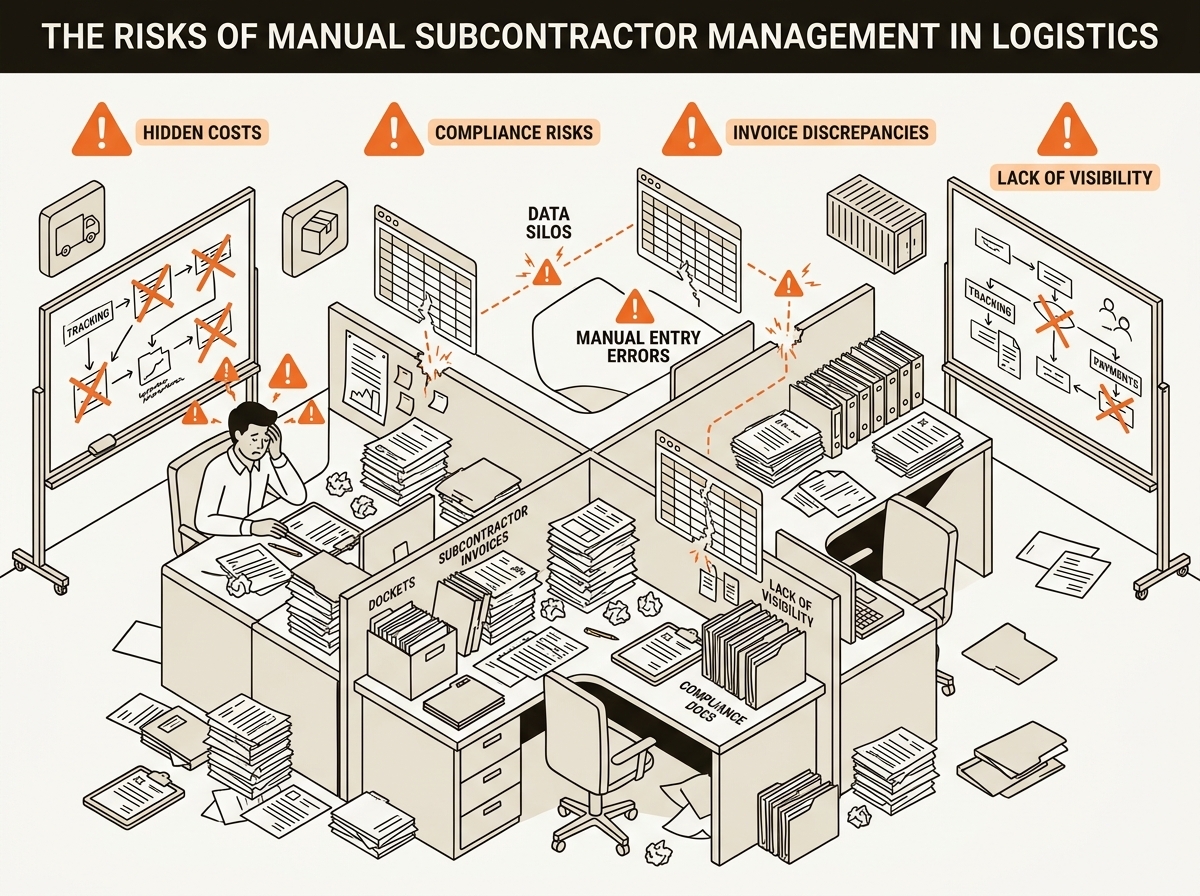
The Hidden Costs and Risks in Manual Subcontractor Management
Manual subcontractor management goes well beyond writing cheques or processing EFTs. It includes verifying rate cards, reconciling job completion, checking insurance compliance, and ensuring timely, accurate payments. When processes are fragmented, spread across emails, paper dockets, and standalone accounting packages, the risk profile increases at every step:
- Payment Errors: Manual data entry and duplicated information between TMS, spreadsheets, and finance systems can result in overpayments, missed jobs, or incorrect rates applied. These errors often go unnoticed until month-end, if at all.
- Disputes and Delays: Inaccurate or delayed payments erode subcontractor trust, disrupt service levels, and can even put critical capacity at risk during peak periods.
- Compliance Gaps: Failing to validate subcontractor credentials (insurance, licenses, vehicle registration) before payment exposes the business to regulatory breaches under NHVR and WHS legislation, potentially leading to fines or audit failures.
- Lost Time and Reduced Agility: Finance teams spend excessive hours reconciling job data against invoices, chasing missing paperwork from depots, and fielding queries from operations; time that could be spent on strategic analysis and cash flow planning.
These hidden costs accumulate into a significant burden, directly impacting margin and the ability to deliver accurate, timely financials to the board and stakeholders.
How Payment Errors and Delays Impact Cash Flow and Compliance
Errors and inefficiencies in subcontractor payments are not just administrative nuisances; they have measurable financial consequences:
- Impacts on Cost Control: Inconsistent application of subcontractor rates and ad hoc corrections make it difficult to track true cost per job or lane. This complicates profitability analysis at branch or client level, leading to missed opportunities to renegotiate terms or exit unprofitable contracts.
- Cash Flow Risk: Payment delays caused by manual reconciliation can trigger disputes, resulting in withheld capacity at critical times or even legal claims. Meanwhile, missing documentation or late submissions slow down BAS and GST preparation, pushing compliance workloads into overtime.
- Compliance Exposure: Without structured validation, expired insurance or unlicensed subcontractors may be paid unknowingly. In the event of an incident, the business faces exposure not just to fines, but also reputational damage and interruptions to service continuity.
The broader impact is a finance function perpetually in reactive mode, with little capacity left for strategic planning, scenario analysis, or proactive risk management.
Automation’s Role in Cost Control and Financial Visibility
Modern freight ERPs like JAIX’s Accounts module, tightly integrated with a Transport Management System, offer a solution purpose-built for the realities of Australian logistics. By centralising and automating subcontractor payment workflows, these systems deliver:
- Single Source of Truth: All subcontractor job data, rate cards, and compliance checks are linked directly to the job record, eliminating duplicate entry and ensuring payments align precisely with completed work.
- Automated Rate Application: Consignment data flows into AP, applying correct rates and surfacing discrepancies instantly. No more last-minute spreadsheet reconciliations or missed cost recovery.
- Automated Compliance Checks: Before processing payment, the system validates subcontractor credentials (insurance, licenses, vehicle registration). Non-compliant subcontractors are flagged, protecting the business from regulatory risk.
- Streamlined Approval and Reporting: Scheduled payment runs, automated alerts for missing documentation, and out-of-the-box BI dashboards provide real-time insight into payables, cost allocation by depot, and overall AP performance.
- Improved Vendor Relationships: Timely, accurate payments foster stronger relationships with subcontractors, securing capacity and reducing churn in a competitive market.
With these capabilities, finance leaders not only reduce administrative overhead but also gain granular control over cost allocation, improve audit readiness, and deliver timely financial reporting for executive decision-making.
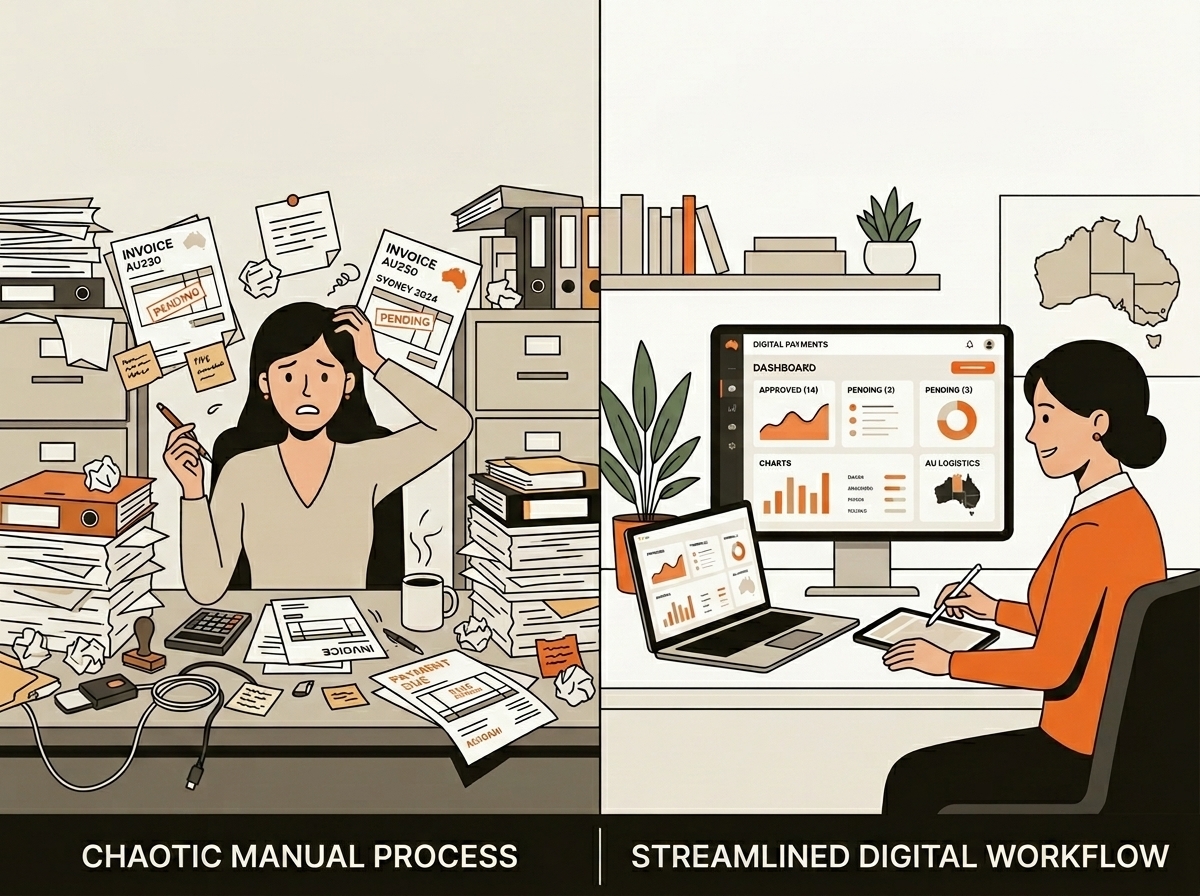
Case Example: From Manual Chaos to Automated Confidence
Consider a mid-market 3PL operating across five depots, previously managing subcontractor payments with a patchwork of spreadsheets and periodic email approvals. The finance team spent days each month reconciling job completion data from the TMS with invoices, often discovering discrepancies only after subcontractors had raised disputes. Compliance checks were handled via email, prone to missed expirations and incomplete documentation.
After implementing JAIX’s Accounts module, integrated directly with their TMS:
- Job completion data is automatically matched to subcontractor invoices, with rates and compliance status checked at the point of payment.
- Payment errors and disputes have dropped by over 60%, freeing up the finance team to focus on value-add analysis and credit control.
- BAS and GST reporting draws from a single, auditable data set, reducing the compliance preparation cycle from weeks to just a few days.
- Depot managers receive timely, accurate P&L reports, supporting better local decision-making and faster identification of unprofitable routes or clients.
This shift from manual chaos to automated confidence has enabled finance leaders to steer the business with data they trust, delivered fast, and with minimal overhead.
Key Takeaways for Financial Leaders in Transport & Logistics
For CFOs and finance decision-makers in the transport sector, the cost of manual subcontractor payment processes extends far beyond lost time. Manual approaches conceal financial leakage, slow down compliance, and limit the organisation’s agility in a demanding market.
Payment automation, through an integrated Accounts module and TMS, empowers finance teams to:
- Eliminate payment errors and disputes through seamless data flows and compliance automation.
- Reduce cost-per-job and improve margin visibility at every level, depot, job, lane, or client.
- Deliver timely statutory and management reporting, supporting stronger business decisions and board confidence.
- Free up valuable finance team capacity for strategic initiatives, not just admin firefighting.
In an environment where operational complexity and regulatory demands are only increasing, automation is not just a cost-saving measure; it is the foundation for sustainable profitability and strategic agility.