Why Modern Logistics CEOs Need a Whole-of-Business ERP
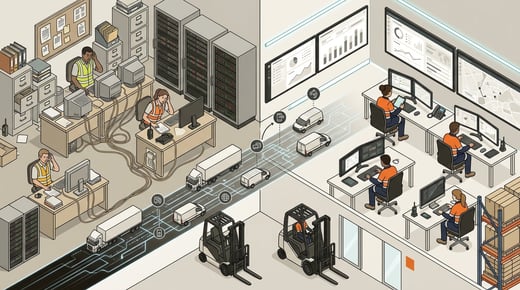
In the contemporary ANZ transport and logistics sector, CEOs face a relentless pressure to grow revenue without ballooning operational overhead. With shifting customer expectations, tightening compliance frameworks, and fierce market competition, leaders can no longer rely on disconnected legacy tools, manual processes, and patchwork integrations. Instead, the strategic advantage increasingly belongs to those who deploy a deeply integrated ERP platform that unifies dispatch, accounts, workshop, and driver workflows, delivering the scalable foundation that growth demands without the drag of proportional headcount increases.
For mid-market carriers, 3PLs, and integrated operators, operational complexity is the norm. Freight moves through multiple depots, assets are distributed nationally, and compliance requirements evolve rapidly. CEOs targeting double-digit revenue growth and top-tier DIFOT (on-time, in-full) performance cannot accept the friction of siloed data, manual reconciliations, or reactive compliance management. They need a single source of truth with real-time visibility, automated workflows, and role-based access that empower every layer of the organisation, from the boardroom to the depot floor.
A modern Transport Management System (TMS), when deployed as the backbone of a whole-of-business ERP, is no longer just about moving freight. It is a strategic enabler for scale, profitability, and operational excellence. The result is a business where the CEO can confidently drive growth, knowing that admin overhead, compliance risk, and process bottlenecks are systematically addressed by the platform, not papered over by extra staff.
Breaking the Headcount-Growth Link: Operational Scale through Integration
Growth has traditionally meant one thing for logistics operators: more people. As volumes rise, so do the number of dispatchers, admin staff, compliance officers, and back-office personnel. But this model is not sustainable in a margin-sensitive sector. CEOs now seek ways to scale throughput and service scope while minimizing the addition of new roles, a challenge only solved through meaningful digitisation and system integration.
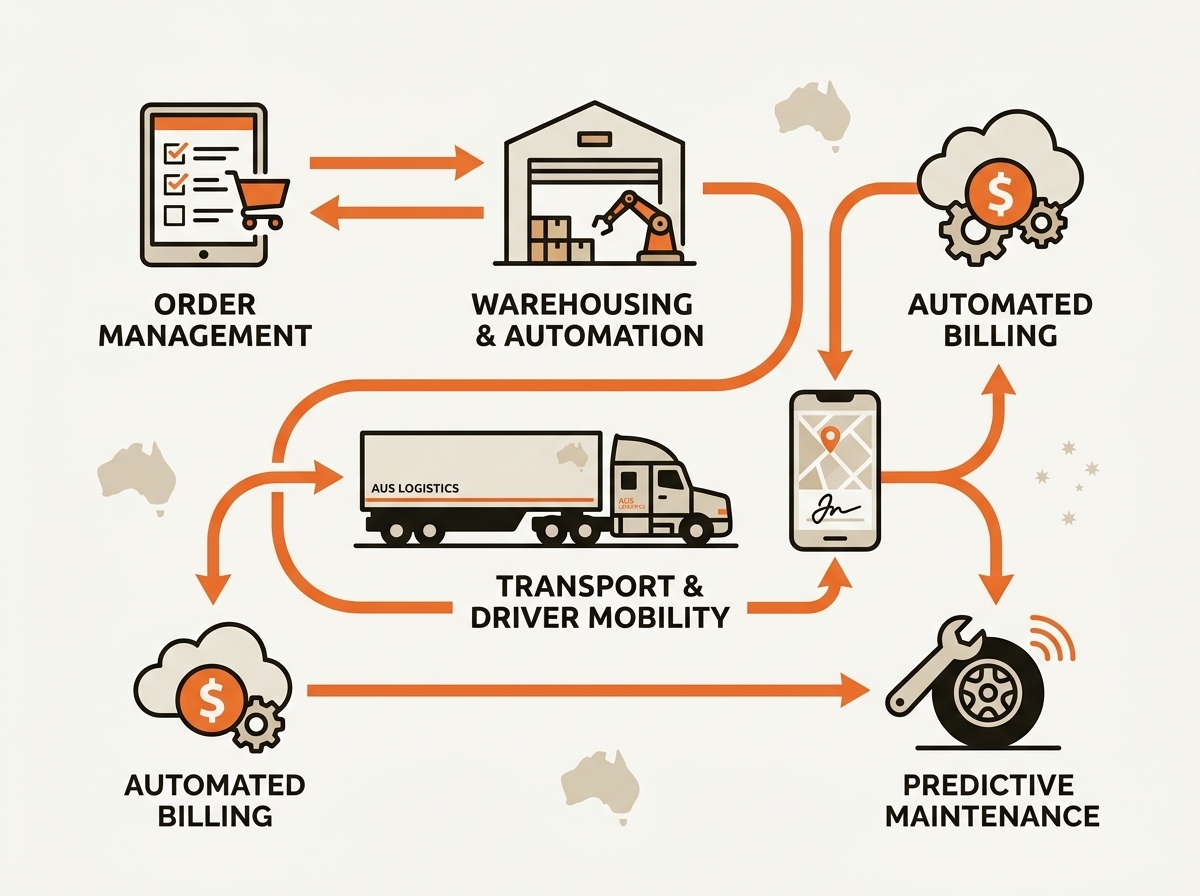
A deeply integrated ERP, anchored by JAIX’s Transport Management System (TMS), transforms this equation. Instead of layering more staff to plug the gaps between TMS, WMS, workshop, and finance modules, the right platform unifies these domains:
- Consignment Creation & Manifest Management: With JAIX TMS, bookings, dispatch, and invoicing are managed in one workflow, eliminating duplicated data entry and the need for separate admin teams.
- Automated Billing and Proof of Delivery (POD): Digital POD capture at the point of delivery feeds directly into automated invoicing, compressing the order-to-cash cycle and freeing the accounts team from chasing paperwork.
- Subcontractor and Compliance Management: Automated validation of driver licences, subcontractor insurance, and asset registrations directly within the TMS ensures that only compliant resources are allocated; no additional compliance clerks required.
- Workshop & Asset Maintenance Integration: Planned and predictive maintenance workflows, integrated with vehicle availability in the TMS, enable proactive fleet management. This reduces unplanned downtime, emergency subcontractor spending, and manual coordination between depots and workshop managers.
- Accounts and Financial Consolidation: With JAIX Accounts, financial data flows automatically from operational modules. Depot-level and asset-level profitability reporting is available without manual spreadsheet reconciliation, reducing the finance team’s reporting overhead and board-pack collation time.
Consider a mid-sized linehaul operator aiming to boost throughput by 20% while capping operational headcount growth under 10%. Without integrated systems, this would require hiring across dispatch, admin, and finance just to keep up with manual job allocation, billing, compliance checks, and reporting. With JAIX ERP, each incremental shipment leverages the same digital workflows, admin effort per job shrinks, headcount scales far slower than revenue, and growth is truly profitable.
Key Business Outcomes: Profit, Margin, and Sustainable Growth
A modern ERP is more than a process automation tool. For CEOs, it is a lever that turns operational excellence into measurable financial outcomes:
1. Margin Protection and Revenue Growth
- Eliminate Revenue Leakage: The highly configurable JAIX rating engine applies customer-specific rates and surcharges automatically at consignment creation. This virtually eliminates billing errors and disputes that erode profit, allowing revenue to grow without admin firefighting.
- Reduce Credit Notes and Disputes: Automated, accurate invoicing and digital PODs ensure customers are billed correctly the first time. This reduces time spent on disputes and credit notes, freeing staff for value-added work.
2. Cost Control through Automation
- Lower Admin Overhead: Integrated workflows across dispatch, accounts, and workshop mean fewer people are needed to process higher freight volumes. Manual interventions, data re-entry, and exception chasing are minimized.
- Smart Subcontractor Management: Automated rate card application and compliance checks reduce the risk of underpriced jobs and non-compliant allocations, driving better commercial decisions and reducing manual oversight.
3. Data-Driven Decision Making
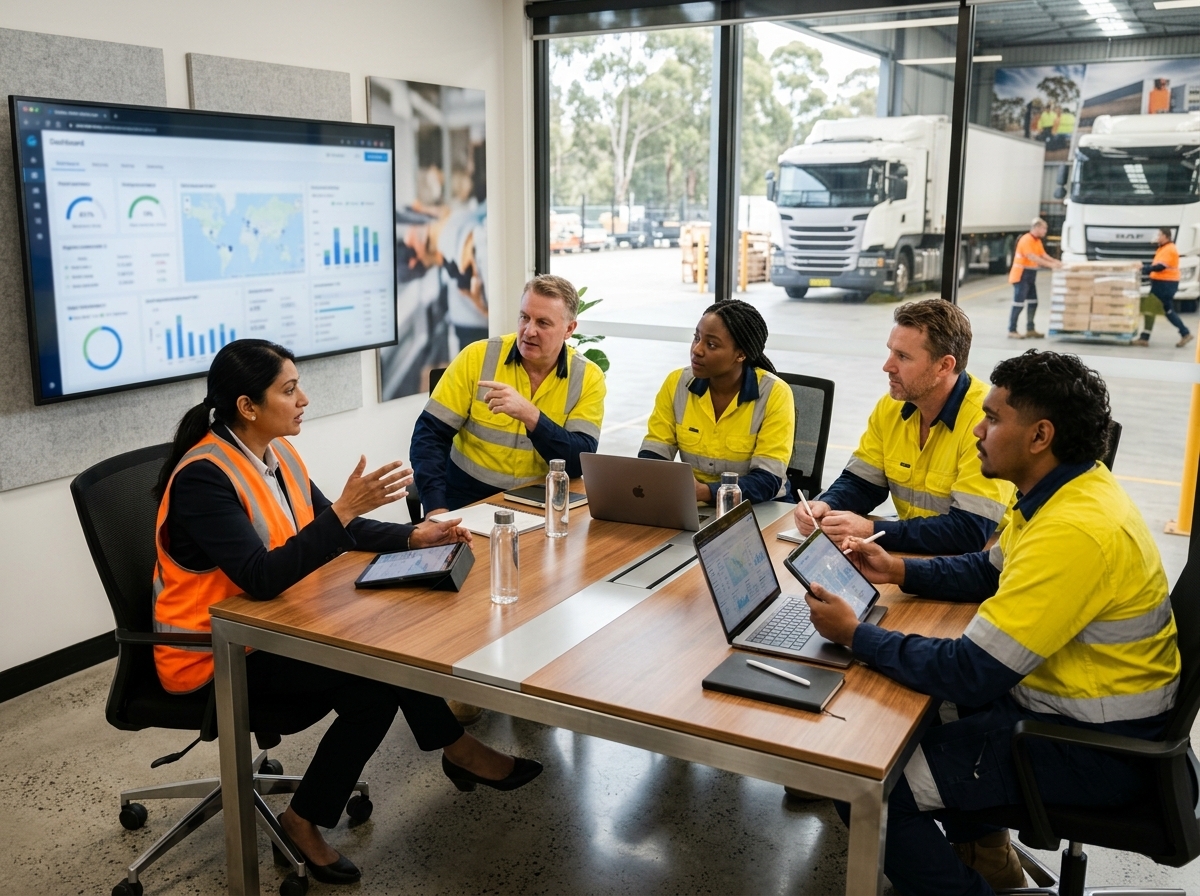
- Unified, Real-Time Reporting: With Power BI dashboards and consolidated ERP data, CEOs and managers access profitability, DIFOT, and compliance metrics by depot, customer, or asset, anytime, anywhere. This supports faster, more confident strategy adjustments.
- Audit-Ready Compliance: Automated record-keeping and digital alerts ensure compliance documentation is always up-to-date and accessible, reducing regulatory risk and the resource drain of audit preparation.
4. Enhanced Staff Engagement and Retention
- Modern Tools for a Modern Workforce: Digital workflows reduce frustration and manual admin, supporting a professional environment that helps retain quality staff and attract new talent in a competitive market.
5. Scalability for Growth and Change
- Onboard New Depots with Ease: The ERP’s role-based access and multi-entity capability allow new depots or business units to be integrated quickly, supporting expansion without reworking core processes or reinventing reporting structures.
Ultimately, the platform’s impact goes beyond operational metrics. CEOs secure the ability to drive double-digit growth, maintain or improve margins, and lead with confidence in compliance management, all without a proportional increase in headcount. This is how operational complexity is transformed from a barrier into a competitive advantage.
Conclusion
For logistics CEOs in Australia and New Zealand, the path to sustainable, profitable scale is clear. The days of piecing together point solutions and plugging gaps with extra staff are over. A unified, whole-of-business ERP, anchored by an advanced TMS and seamlessly integrated with accounts, workshop, and driver mobility modules, provides the foundation for growth, margin, and operational excellence.
By investing in a modern ERP platform like JAIX, leaders can shift the growth paradigm: throughput rises, admin headcount does not, and the business becomes more resilient, agile, and attractive to both customers and staff. It is the strategic lever CEOs need to lead their organisations into the next era of logistics.